
AI Readiness & ROI
AI Usage Is Not the Same as Value: How to Measure Microsoft 365 Copilot ROI

Amina Alkazemi
1 October 2026 · 7 min read

If more employees are using AI, does that automatically mean the investment is successful?
I don’t think so.
Interestingly, Microsoft’s own experience suggests we should be asking a different question.
Microsoft provided AI tools to more than 200,000 employees, alongside training and support designed to encourage adoption. But in one of its early sales rollouts, usage growth plateaued and the expected impact failed to materialise.
The breakthrough came when the team stopped focusing primarily on adoption and started focusing on work.
They examined how account managers spent their time and identified specific activities where AI could make a meaningful difference, including researching customers and preparing deal packages.
The lesson is simple.
Using AI is not the goal. Improving important work is the goal.
That distinction matters because AI usage is not the same as AI value.
Free Copilot Value Assessment
Is your AI investment creating value, or just activity?
Get your Copilot Value Confidence Score out of 30 in about 5 minutes, with your strengths, your gaps and a clear next step.
Take the Free AssessmentWhat Microsoft 365 Copilot Usage Data Actually Tells You
One of the most common questions I hear is:
How do we increase Copilot adoption?
Usually, that question appears after an organisation has reviewed its Microsoft 365 Copilot dashboard and noticed that usage isn’t as high as expected.
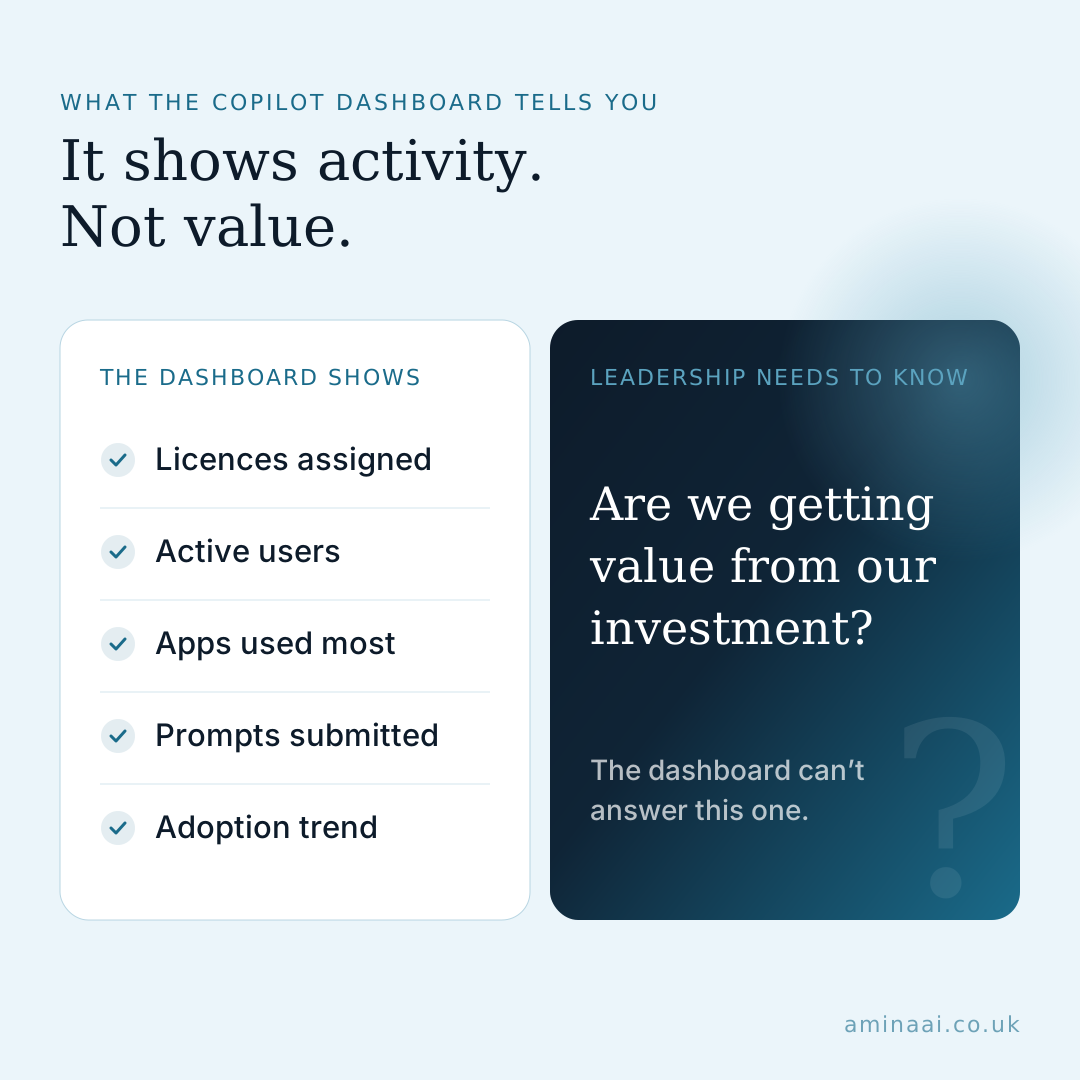
The dashboard can tell us useful things. It can show:
- How many licences have been assigned
- How many people are active users
- Which Microsoft 365 applications people use most
- How many prompts are being submitted
- Whether adoption is increasing or decreasing
Those metrics matter.
But none of them answer the question leadership actually cares about:
Are we getting value from our investment?
A dashboard can tell you whether people are using Microsoft 365 Copilot. It cannot tell you whether the organisation is receiving a return on that investment.
Why High AI Adoption Does Not Guarantee Business Value
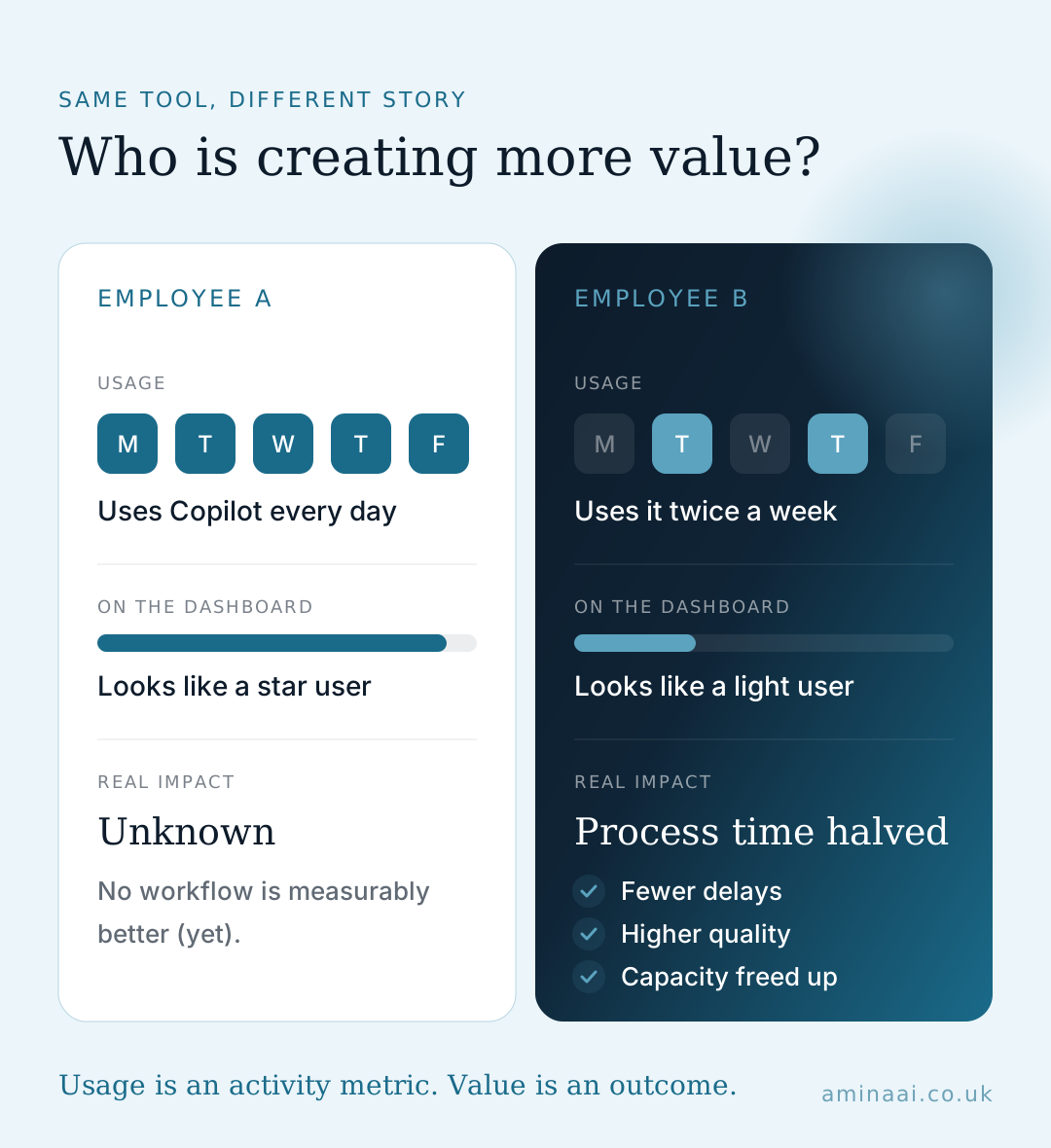
Imagine two employees.
The first uses Copilot every day.
The second uses it only twice a week.
Looking only at usage data, the first employee appears more successful.
But what if the second employee uses Copilot to complete a critical process in half the time, reduces delays, improves quality and frees up capacity for higher-value work?
Who is creating more value?
The answer is obvious. Yet many organisations continue to treat usage as the primary measure of success.
The problem is that usage is an activity metric. Value is an outcome.
They are related, but they are not the same thing.
What the Evidence on Microsoft 365 Copilot Tells Us
Recent evaluations of Microsoft 365 Copilot have reported encouraging findings. Users frequently report:
- Time savings
- Faster drafting
- Better quality outputs
- Improved job satisfaction
- Reduced administrative burden
Those findings are important.
However, there is a difference between improving a task and improving an organisation.
Several studies found evidence of time savings and positive user experiences, but much weaker evidence that these improvements consistently translated into measurable organisational productivity gains.
That doesn’t mean the benefits aren’t real.
It means organisations need to look beyond adoption figures and self-reported time savings if they want to understand whether Microsoft 365 Copilot is delivering value.
A faster task only becomes organisational value when something meaningful happens with the capacity that is released.
The Three Questions Every Leadership Team Should Ask
When reviewing AI investments, I think leadership teams should focus on three questions.
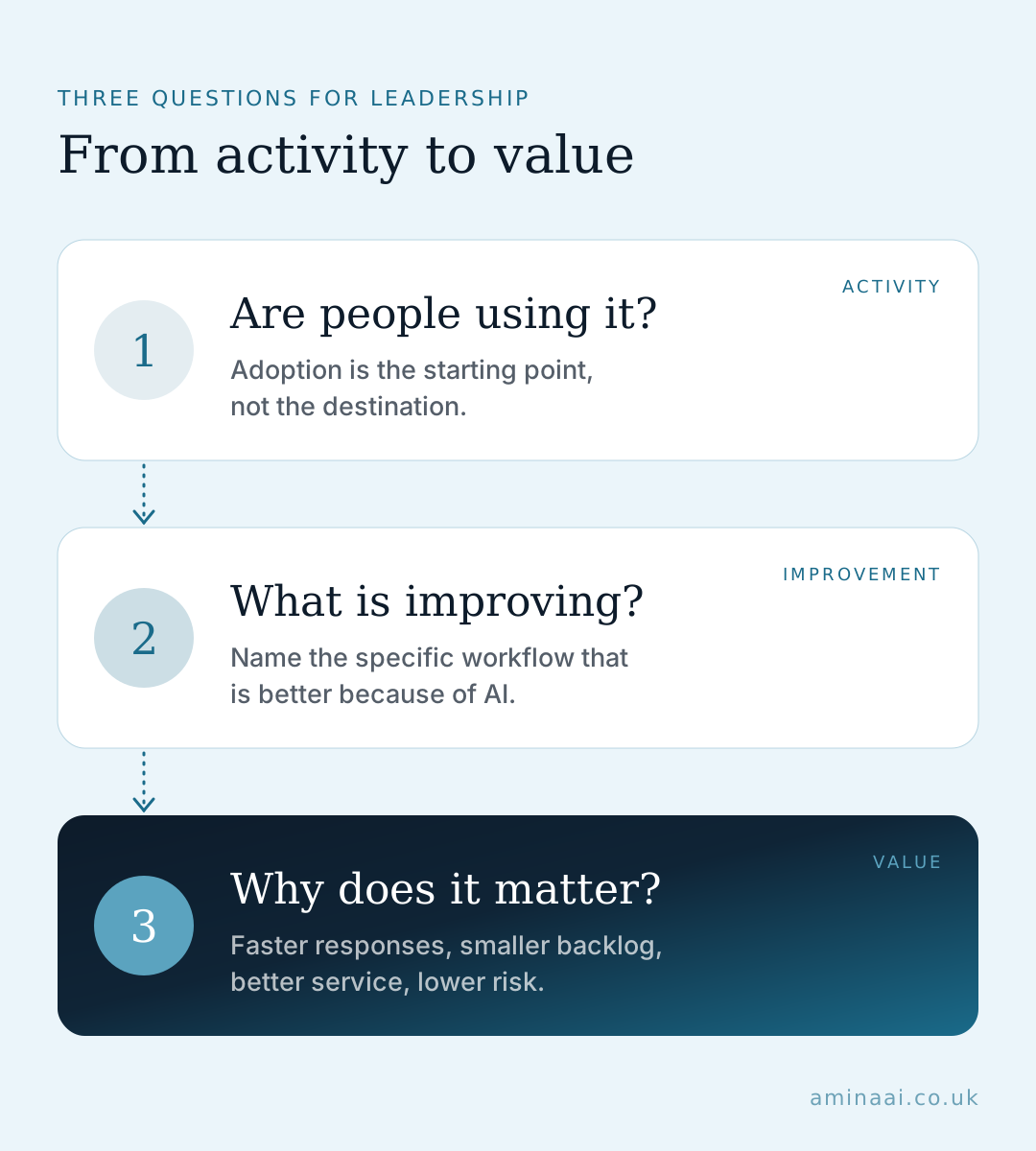
1. Are people using it?
This is where adoption reporting is useful.
If nobody is using the technology, it’s difficult to create value.
But adoption is the starting point, not the destination.
2. What is improving?
This is the question many organisations skip.
What specific workflow is better because of AI? Examples might include:
- Faster responses to customer or student enquiries
- Reduced time spent preparing reports
- Quicker meeting administration
- More efficient document drafting
- Better access to organisational knowledge
- Faster onboarding of new staff
Without a measurable workflow improvement, usage has very little meaning.
3. Why does that improvement matter?
This is where value appears.
If a task takes less time, what happens next?
- Does a customer receive a faster response?
- Does a student get support more quickly?
- Does the organisation reduce its backlog?
- Does service quality improve?
- Does risk decrease?
- Does staff capacity get redirected to higher-value work?
If we cannot explain why the improvement matters, it becomes difficult to justify calling the investment successful.
How to Measure Microsoft 365 Copilot Value Properly
Instead of focusing solely on usage statistics, organisations should connect adoption data to business outcomes.
I recommend looking at four layers.
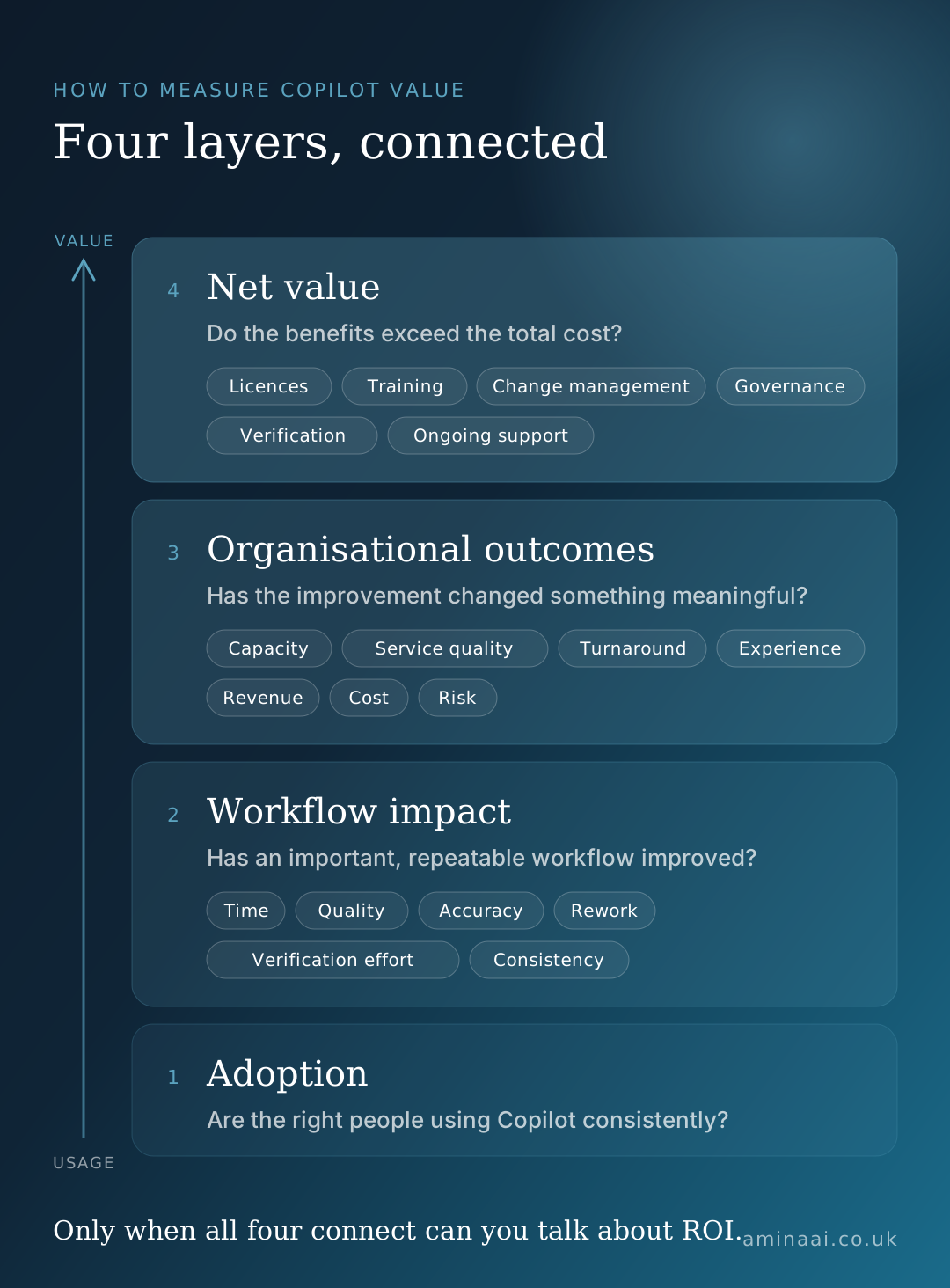
1. Adoption
Are the right people using Copilot consistently?
2. Workflow impact
Has Copilot improved an important and repeatable workflow? Measure:
- Time
- Quality
- Accuracy
- Rework
- Verification effort
- Consistency
3. Organisational outcomes
Has that improvement changed something meaningful? For example:
- Capacity
- Service quality
- Turnaround times
- Customer or student experience
- Revenue
- Cost
- Risk
4. Net value
Do the benefits exceed the total cost? That means accounting for:
- Licences
- Training
- Change management
- Governance
- Verification
- Ongoing support
Only when all four layers are connected can we confidently talk about return on investment.
Learn more about the Copilot Adoption & Investment Review
Many organisations discover that adoption data alone isn’t enough to determine whether Microsoft 365 Copilot is creating value.
The Amina AI Copilot Adoption & Investment Review helps organisations assess business value, workflow impact, sustainable adoption, licence efficiency and governance readiness before making renewal, expansion or reallocation decisions. Start with the free assessment.
The Mistake Many Organisations Are Making
The easiest thing to measure is usage.
The hardest thing to measure is value.
As a result, many organisations focus on what is available rather than what matters.
They celebrate rising adoption. They monitor active-user percentages. They track prompt counts.
But they struggle to explain how any of those numbers have improved service quality, increased capacity, reduced cost, improved decision-making or lowered risk.
That’s not a criticism. It’s understandable.
Measuring value is more difficult than measuring activity. But it is also far more important.
A Better Question Than “How Do We Increase Adoption?”
Most organisations ask:
How do we increase Copilot adoption?
A more useful question might be:
Should we increase adoption at all?
If Copilot is creating measurable value in a workflow, scaling adoption makes sense.
If it isn’t, increasing usage alone may simply create more activity without creating more value.
The goal is not to maximise usage. The goal is to maximise value.
Usage is a leading indicator. Value is the outcome.
And organisations that understand the difference are far more likely to realise a meaningful return from their AI investment.
Not Sure Whether Microsoft 365 Copilot Is Delivering Value?
Most organisations can see:
- Who is using Copilot
- How often they use it
- Which features they use
The harder question is whether that usage is creating measurable value.
The Copilot Adoption & Investment Review helps organisations understand:
- Where value is being created
- Which workflows are benefiting
- Whether licences are allocated effectively
- Where adoption barriers exist
- What should happen next before expanding, renewing or reassigning licences
If you’re considering your next Microsoft 365 Copilot investment decision, start by understanding whether the value is actually there.
Take the free Copilot Value Assessment to see how confidently your organisation can evidence Copilot value today.
Not sure whether Copilot is delivering value? Start here.
Start with our free Copilot Value Assessment. 10 questions. 5 minutes. A score out of 30, your strengths and gaps, and a clear next step.
Take the Free Assessment →More in AI Readiness & ROI